
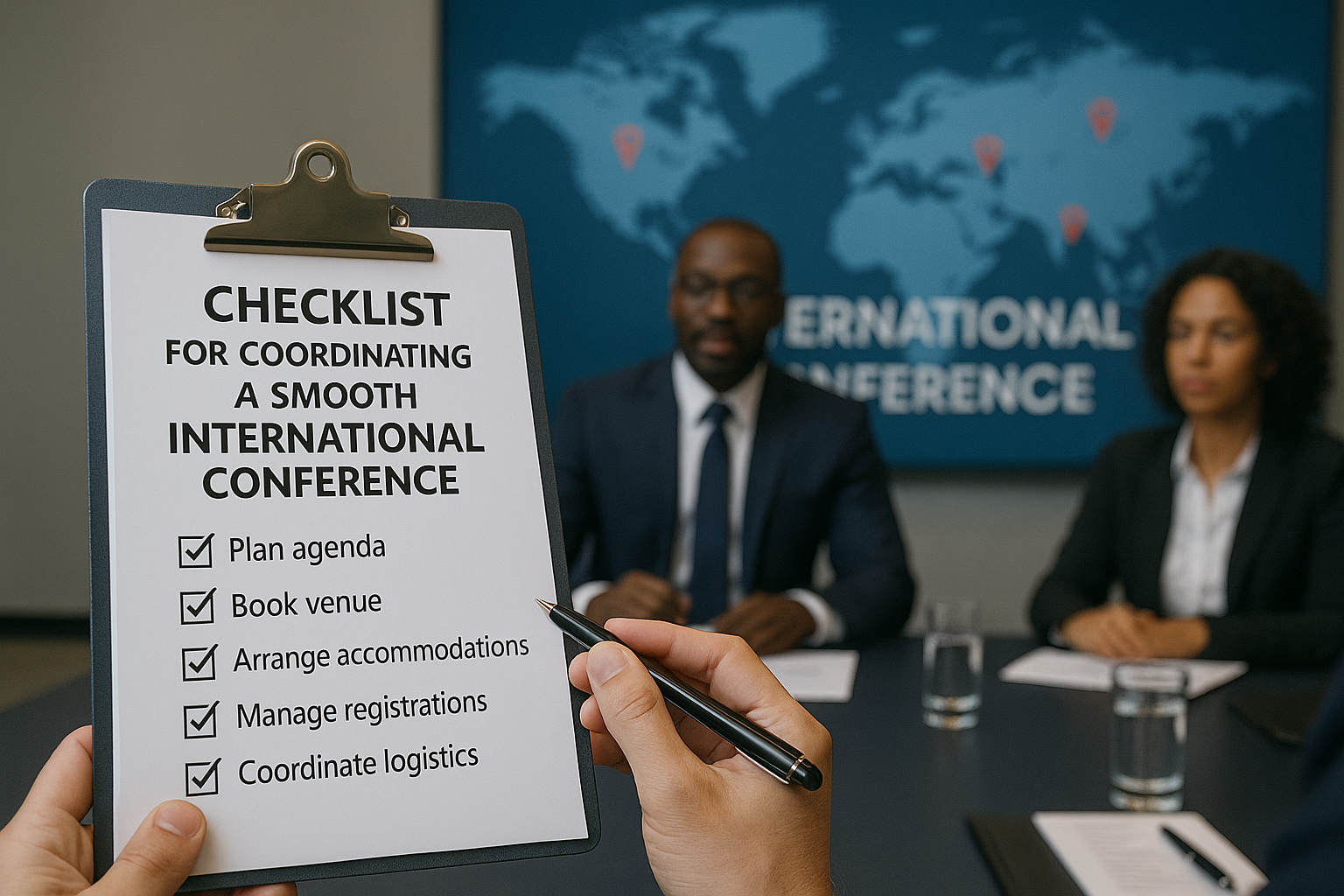
The buzz of anticipation was electric as the hall filled with voices speaking different languages, delegates arriving from across the globe for the much-awaited summit. But what seemed effortless on the surface was, in fact, the result of months of meticulous coordination. Planning an international conference is no small feat—it’s a logistical symphony that demands precision, teamwork, and foresight. This guide is crafted for professional event coordinators, academic institutions, corporate hosts, and non-profits looking to deliver seamless global gatherings.
Key takeaways:
- Pre-planning essentials for international events
- Venue and technology coordination tips
- Delegate travel and accommodation logistics
- Cultural and language considerations
- On-site and post-event management strategies
1. Define Objectives and Stakeholder Expectations
Before diving into logistics, clarify the purpose of the event. Is it a corporate summit, a scientific conference, or an NGO symposium? Sit down with key stakeholders to define goals, target audiences, and success metrics. This step ensures all planning aligns with the event’s mission.
2. Create a Detailed Project Timeline
Time zones and language barriers can cause delays if timelines aren’t clear. Use project management tools like Trello, Asana, or Monday.com to break down tasks into weekly checkpoints. Schedule planning meetings that accommodate various time zones to maintain inclusivity in your team.
Tip: Begin planning at least 9–12 months in advance.
3. Select the Ideal Venue for Global Delegates
Venue selection is crucial when coordinating international conferences. Choose a location with robust infrastructure, proximity to an international airport, and easy visa access for attendees.
Considerations include:
- Venue capacity and accessibility
- AV and tech facilities
- Breakout rooms for workshops
- Catering that accommodates dietary restrictions
Cities like London, Dubai, and Singapore often top the list due to their global connectivity and world-class venues.
4. Budgeting and Sponsorship Planning
International events come with premium costs—think flights, accommodation, interpretation services, and tech setups. Develop a transparent budget and look for potential sponsors early on. Include contingency funds for unforeseen issues like flight delays or tech malfunctions.
Suggested budget categories:
| Category | Example Expenses |
| Travel & Lodging | Flights, hotel bookings, transport |
| Venue & Tech | Rental fees, AV support |
| Marketing & Branding | Banners, website, media outreach |
| Hospitality | Catering, entertainment |
5. Registration and Ticketing System Setup
Your event tech stack should allow for multilingual registration forms, tiered ticketing, and real-time updates. Platforms like Eventbrite or Cvent offer international-friendly features such as local currency payments and language options.
Ensure that attendees can receive confirmation emails, agendas, and helpdesk support in their native languages.
6. Secure Visas and Travel Documentation
Offer visa assistance letters and guidance on travel requirements based on the attendee’s country of origin. Collaborate with legal advisors or consulates for high-risk regions and monitor geopolitical updates that may affect travel.
7. Accommodation and Local Transport Coordination
Partner with hotels near the venue to offer discounted rates for guests. Arrange airport pickups or provide clear instructions for public transport options. Create a mobile-friendly welcome kit with maps, cultural tips, and emergency contacts.
8. Develop a Multilingual Communication Strategy
Language is a bridge, not a barrier. Hire professional interpreters or use translation services for live sessions. Prepare written materials, agendas, and signage in at least two major languages spoken by your attendees.
9. Plan the Conference Programme and Keynotes
Content is king in any conference. Curate a balanced programme with global speakers, interactive sessions, and regional relevance. Avoid back-to-back lectures—interweave coffee breaks and networking opportunities to keep energy levels high.
10. Leverage Technology for Hybrid Access
Not everyone will travel. Offer hybrid access with live-streaming capabilities, on-demand content, and virtual breakout rooms. Ensure strong internet bandwidth and have a backup system in case of outages.
11. Cultural Sensitivity and Inclusivity
Respect local customs and global sensitivities. From attire expectations to food and prayer spaces, small details build trust and comfort. Engage cultural consultants if needed to align the event with international etiquette.
12. Emergency Preparedness Plan
Things can go wrong. Prepare an emergency response plan addressing medical aid, security threats, or travel disruptions. Make this information readily available to attendees and staff.
13. Rehearsals and Run-throughs
Conduct a full technical and programme rehearsal a day before the event. Test microphones, projectors, live feeds, and translation booths. Encourage speakers and panellists to familiarise themselves with the stage and format.
14. On-site Coordination and Staffing
Hire multilingual volunteers or temporary staff to manage registration desks, guide attendees, and handle tech queries. Use walkie-talkies or group messaging tools for real-time coordination between teams.
15. Feedback Collection and Post-Event Review
After the applause dies down, gather feedback through surveys and digital forms. Review what worked and what didn’t with your team. Share a post-event report with stakeholders and sponsors, and begin preparations for the next edition.
Conclusion:
An international conference isn’t just an event—it’s a gateway to collaboration, discovery, and innovation. The smoother the coordination, the greater the impact. With this checklist, you’re equipped to deliver an experience that not only meets but exceeds global expectations.
Ready to elevate your event coordination game? Let’s get started together—visit 234Inspired for more tools, guides, and planning resources tailored for bold global organisers.