
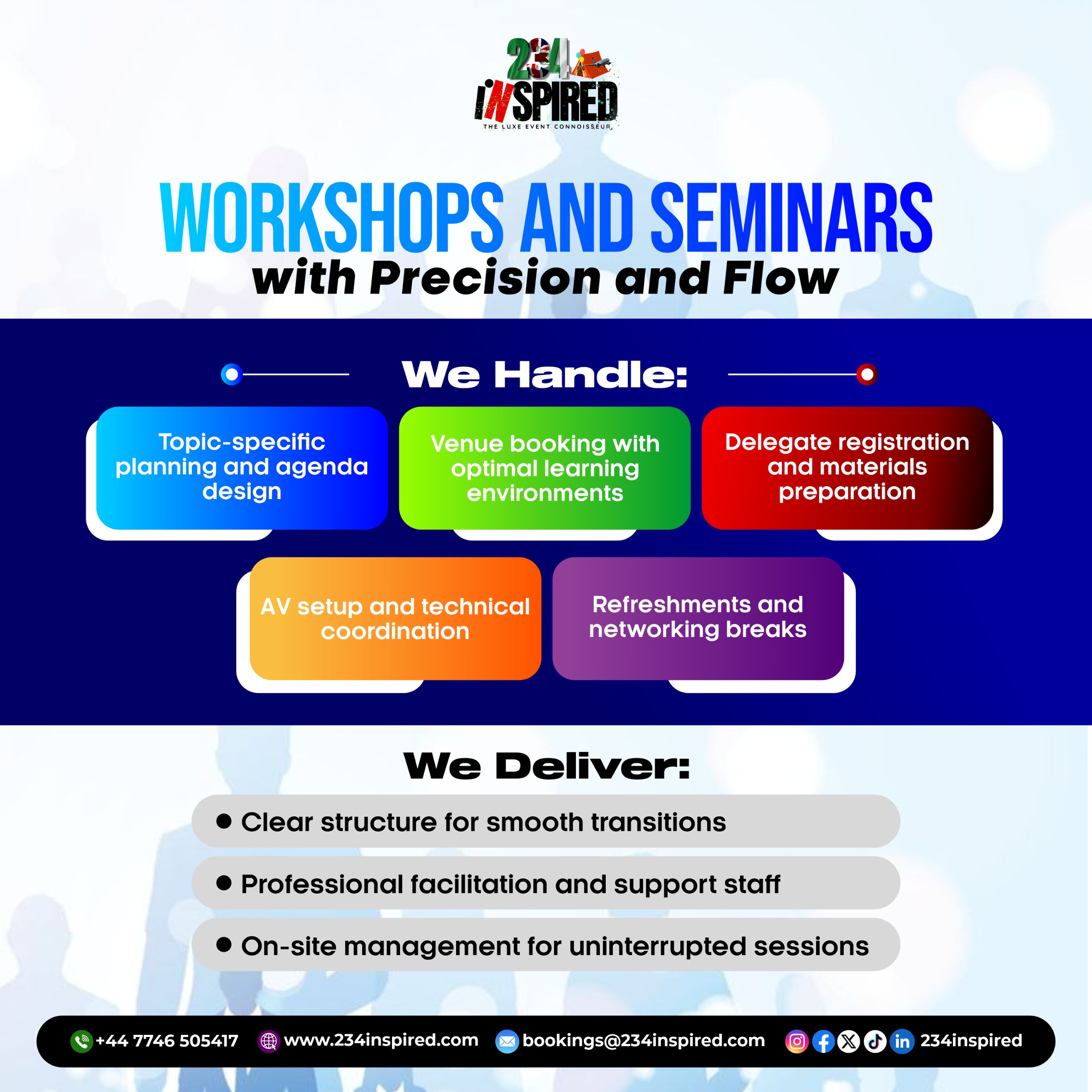
It was a Tuesday morning in London when Sarah, an HR director for a mid-sized tech firm, realised her upcoming training workshop was missing something vital. The agenda was solid, the venue booked, yet she felt a nagging sense that the event could be more engaging. That’s when she learned the truth: in workshop planning, it’s often the smallest details that shape the biggest outcomes.
In the events and corporate training industry, precision and creativity go hand in hand. Missing the subtle elements can mean losing participant engagement, while getting them right can leave a lasting impression.
Key takeaways from this post:
- How small details influence workshop success
- Five essential skills for effective planning
- Examples of details that elevate the experience
- Why attention to detail reflects professionalism
Attention to Detail in Workshop Planning
In corporate training, conferences, and educational workshops, big-picture thinking often gets the spotlight. Yet, it’s the subtle touches, the way refreshments are presented, the flow of registration, or even the placement of seating, that determine how participants feel. These details influence energy levels, networking, and overall satisfaction.
Five Essential Skills for Flawless Workshop Planning
1. Strategic Organisation
An organised planner isn’t just working from a checklist; they see the event as a living timeline. For example, arranging arrival times for speakers and ensuring that presentation equipment is tested beforehand prevents last-minute chaos. Strategic organisation ensures each component, no matter how small, supports the overall workshop objective.
2. Clear Communication
Effective communication builds trust between planners, speakers, vendors, and participants. Sending timely reminders, providing clear joining instructions, and offering accessible contacts for queries helps maintain a smooth flow from planning to execution. Poor communication can unravel months of work, while clear messaging sets a confident tone.
3. Creative Problem-Solving
Unexpected issues are inevitable. A projector may fail, or a key speaker could be delayed. A skilled planner quickly adapts, offering alternative solutions without disrupting the audience’s experience. For instance, having a pre-prepared printed handout for each presentation can bridge the gap if technology falters.
4. Empathy and Audience Awareness
Workshops succeed when participants feel seen and valued. Small details, like offering vegetarian and gluten-free lunch options or providing quiet corners for reflection, show that their needs have been considered. Empathy builds stronger engagement, encouraging attendees to participate more actively.
5. Time Management
Every minute counts in a workshop. Skilled planners ensure that sessions start and finish on time, allowing for smooth transitions between activities. Time management also extends to preparation, ensuring vendors, materials, and staff are ready well before the first guest arrives.
Examples of Small Details That Have a Big Impact
- Personalised name badges that encourage networking
- Well-placed directional signage for easy navigation
- Comfort-focused seating arrangements
- Thoughtful lighting to set the right mood
- A clearly visible, printed agenda for attendees
Conclusion
In workshop planning, the difference between “good” and “exceptional” lies in the finer details. When every element works together seamlessly, participants leave feeling engaged, valued, and energised. Small touches speak volumes about your professionalism and commitment to excellence.
If you’re ready to elevate your next event with thoughtful planning and expert execution, contact 234Inspired, a global event management leader, to bring precision, creativity, and attention to every detail of your workshop.