
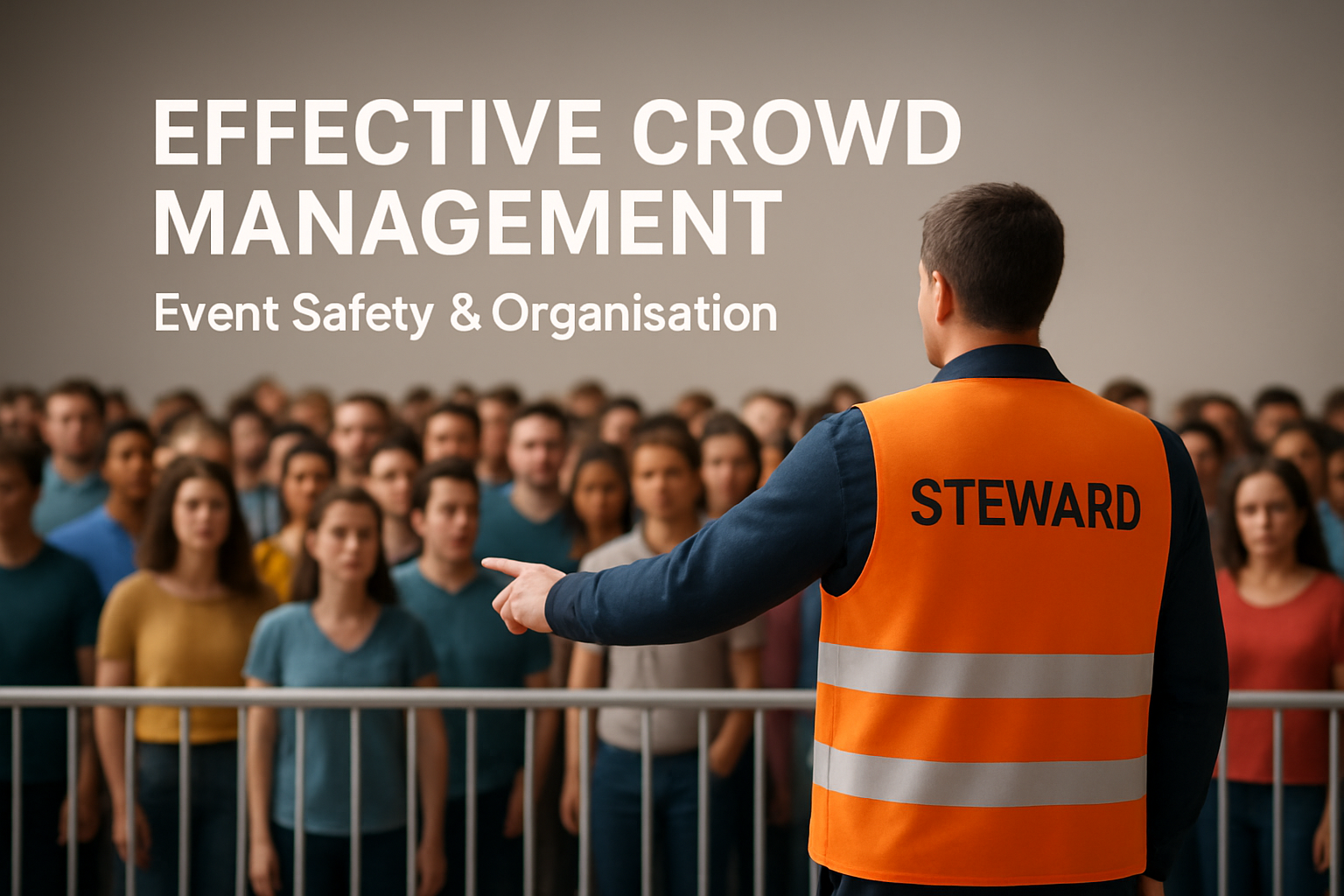
The lights dim, the music rises, and anticipation fills the air. Behind every seamless wedding, buzzing conference, or electrifying concert lies one unsung hero: crowd management. It is the heartbeat of event safety and organisation, protecting both guests and the event experience. From the events industry to hospitality, understanding crowd control is vital for success.
Key takeaways from this guide:
- The importance of crowd management in events
- Five essential skills every organiser must master
- Practical strategies for weddings, concerts, and conferences
- How to create a safe and enjoyable atmosphere for attendees
The Importance of Crowd Management in Large Events
Crowd management is more than directing foot traffic. It ensures safety, prevents chaos, and enhances guest experience. A poorly managed crowd can turn a joyful celebration into a safety hazard. Think of a sold-out concert at Wembley, where thousands of fans arrive at once. Without well-planned entry points and trained personnel, delays and frustrations mount, and risks increase.
The events industry relies heavily on crowd management for compliance with safety regulations, smooth logistics, and the overall success of the occasion. Whether it is a high-profile conference in London’s ExCeL or a lavish wedding in a country estate, skilled crowd handling makes the difference.
Five Essential Crowd Management Skills Every Organiser Needs
1. Planning and Risk Assessment
Every great event starts with a plan. Risk assessments identify potential problems before they arise. For example, a wedding planner must consider emergency exits in case of fire, while a concert organiser anticipates surges when a headline act appears on stage. Planning ensures organisers are ready for both expected and unexpected challenges.
2. Clear Communication
Effective communication keeps everyone aligned. Signage, announcements, and staff briefings help guests know where to go and what to do. At large conferences, digital screens and ushers reduce confusion. In weddings, clear directions to reception areas ease transitions between venues. Good communication also includes contingency messaging for emergencies.
3. Crowd Flow Management
Smooth movement prevents congestion. Pathways, designated entrances, and timed entry slots all contribute to better flow. For instance, at music festivals, staggered ticket scanning reduces bottlenecks. For weddings, structured seating plans and aisle management guide guests comfortably. Crowd flow is about designing pathways that feel natural yet controlled.
4. Emergency Preparedness
No matter the event, safety comes first. From medical emergencies to sudden evacuations, organisers must be prepared. Staff training in first aid, security drills, and access to medical professionals are non-negotiable. In high-density concerts, emergency zones are clearly marked, while at conferences, attendees receive evacuation details at registration. Preparedness ensures fast, calm responses in critical moments.
5. Leadership and Team Coordination
Strong leadership unites staff and volunteers into one effective team. Clear delegation, real-time updates, and confident decision-making allow for smooth execution. For instance, a wedding coordinator calmly directing ushers ensures guests are seated quickly, while a festival manager coordinating with security and stage crews maintains event harmony. Leadership transforms planning into practice.
Practical Strategies for Weddings, Concerts, and Conferences
- Weddings: Assign ushers, provide signage for restrooms and dining areas, and plan seating for easy flow.
- Concerts: Implement security checks, create multiple entrances, and train staff to handle surges.
- Conferences: Use technology for check-in, provide maps of the venue, and schedule sessions with time for transitions.
These strategies combine safety with hospitality, ensuring attendees enjoy themselves without stress.
Conclusion
Crowd management is the silent force that keeps events safe, seamless, and memorable. With strong planning, clear communication, controlled movement, emergency readiness, and strong leadership, organisers can transform potential chaos into order. For anyone in the events industry, mastering these skills is not optional but essential.
If you are planning a wedding, concert, or conference and want professional support, contact 234Inspired, a global event management company dedicated to delivering safe, well-organised, and unforgettable experiences.