
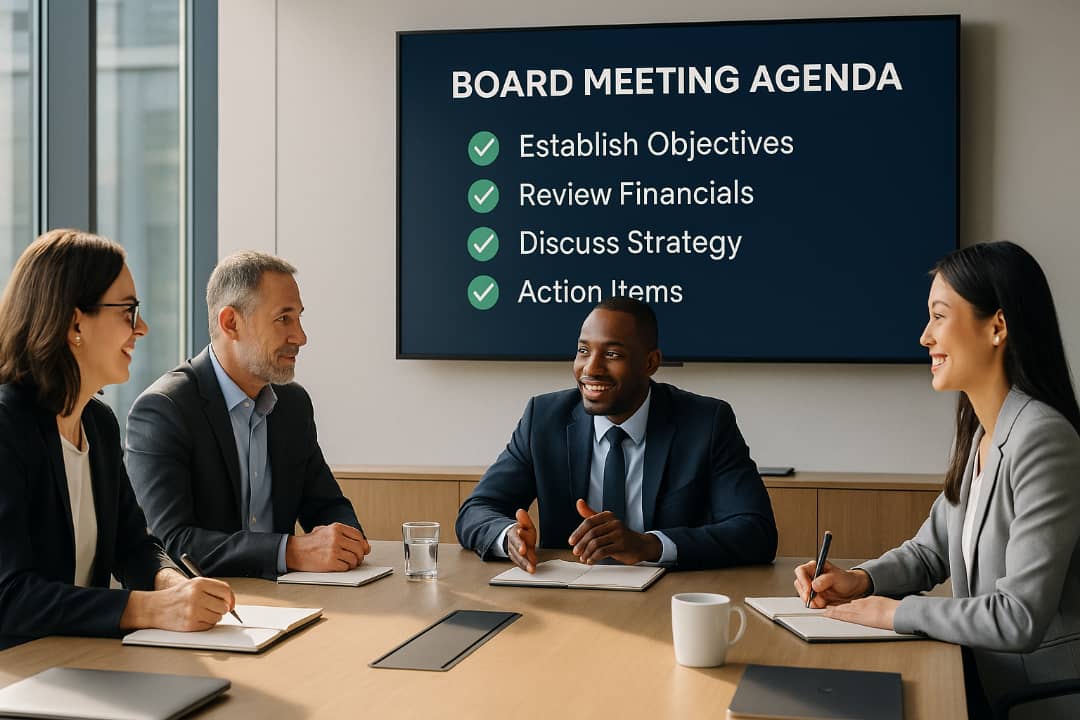
In a quiet boardroom in central London, Emma glanced at her agenda and then at the clock. As the managing director of a rapidly scaling tech company, she knew this quarterly board meeting needed to deliver more than updates—it had to drive decisions. But by the second hour, the room buzzed with distractions, off-track discussions, and nodding heads. A missed opportunity.
Productive board meetings don’t just happen. They are crafted with clarity, communication, and an airtight plan. This matters across industries—non-profits, corporate boards, tech firms, educational institutions—where decisions shape the future and strategy can’t afford to stall.
Key Takeaways:
- Why preparation and communication are critical to board success
- How to create and stick to a structured meeting agenda
- Five essential skills every meeting host should master
- Tools and tips for keeping board members engaged and aligned
- A clear CTA to start refining your boardroom experience
Mastering Board Meeting Preparation
Successful board meetings begin long before the opening remarks. The real work happens in the preparation.
Define Clear Objectives
Every board meeting must have a clear purpose. Are you making decisions, reviewing performance, or discussing risks? Objectives guide the agenda and set expectations.
Send Documents Early
Board packs, financials, strategy updates, and proposals should be distributed at least five days in advance. This gives directors ample time to digest complex data, making discussions more informed.
Set a Realistic Agenda
Don’t try to pack everything into one meeting. Prioritise the top five matters, leave room for questions, and include estimated times to stay on track.
Designate Roles and Responsibilities
Clarify who will lead which section. Having board members or external advisors briefly present their insights can break monotony and encourage participation.
Check the Tech
For hybrid or remote meetings, confirm your video platform is reliable. Appoint someone to manage slides, notes, and chat questions. A tech glitch shouldn’t derail a major decision.
Five Essential Skills for Leading Effective Board Meetings
Hosting a productive board meeting requires more than scheduling and note-taking. These five essential skills make the difference between passive attendance and strategic action.
1. Strategic Communication
A strong chairperson must know how to deliver insights clearly and diplomatically. Avoid jargon. Frame discussions around outcomes. For instance, instead of presenting a list of financial metrics, start with what the numbers mean for the company’s trajectory.
2. Active Listening
Listening is a skill—especially when voices in the room are senior, diverse, and occasionally opposing. Summarise contributions to confirm understanding and keep discussions balanced. “So what I’m hearing is…” can be a powerful way to realign perspectives.
3. Time Management
Time is the most expensive asset in the boardroom. Develop an internal clock for discussions and transitions. If a topic drags, suggest taking it offline or assigning it to a smaller working group.
4. Decision Facilitation
Sometimes, discussions swirl without resolution. Skillful hosts guide the group towards decisions. Use tools like voting, consensus rounds, or structured debate to push through ambiguity and drive action.
5. Emotional Intelligence
Meetings can turn tense—especially with difficult issues or conflicting views. Emotional intelligence helps a leader remain calm, respond respectfully, and preserve the room’s morale. Emma, from our opening story, could’ve redirected the off-topic banter with a confident but kind statement like, “Let’s park that and return to our core agenda.”
Engaging Your Board Members
The best meetings spark energy and ownership. Keep your board engaged with these strategies:
- Open with a win: Start with a short highlight reel of recent progress. It sets a positive tone.
- Use visuals: Charts, timelines, and dashboards communicate more effectively than text-heavy reports.
- Break up monotony: Insert short discussions or breakout reflections. Let others contribute, not just the chair.
- Follow up: Send a concise recap with action items, due dates, and next steps. Accountability sustains momentum.
Conclusion: Turn Meetings into Momentum
Board meetings don’t have to feel long, dry, or disconnected. With intentional planning, skilled facilitation, and a structured checklist, every meeting can become a springboard for strategy, alignment, and action.
Leaders who take the time to refine their meeting practices don’t just make the boardroom more efficient—they set the tone for a forward-moving organisation.
Ready to lead meetings that matter? Start implementing these strategies today and explore more resources with 234Inspired.