
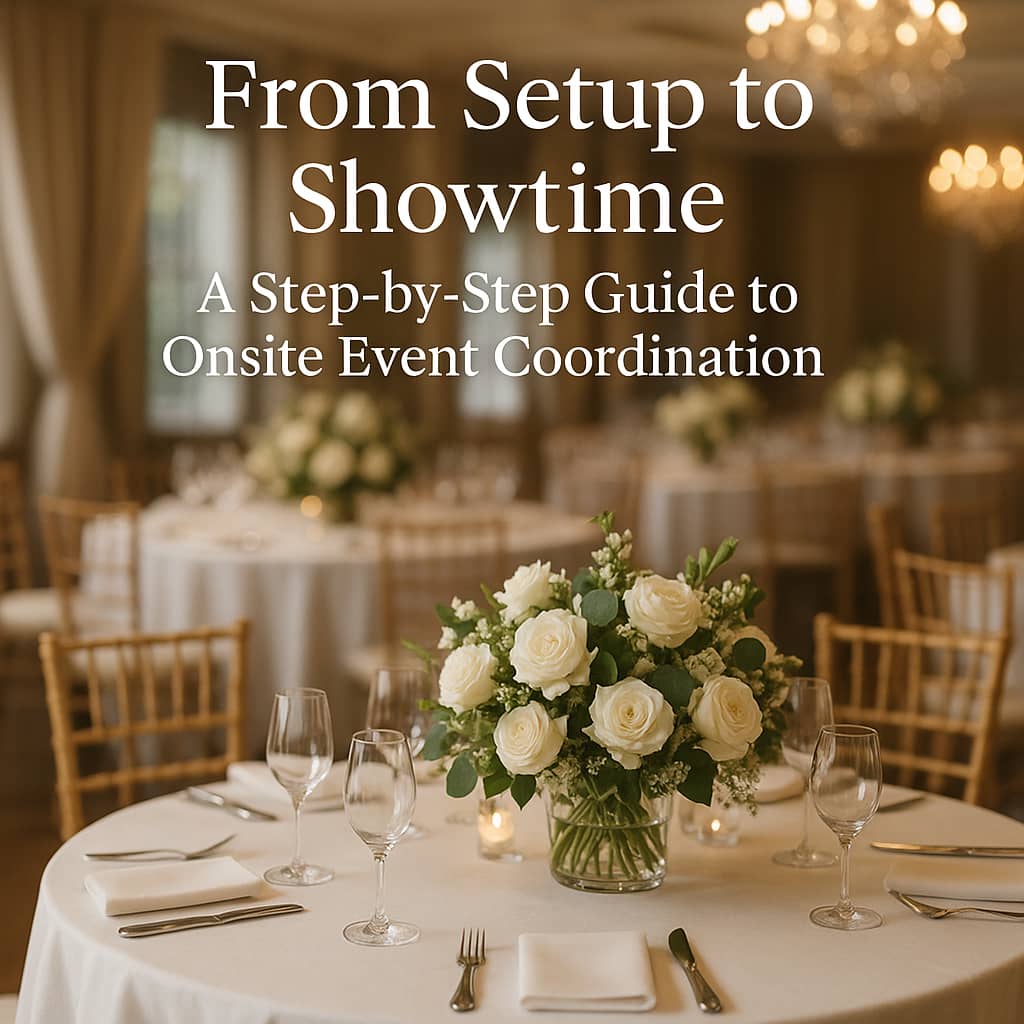
The buzz of anticipation, the hum of last-minute preparations, and the satisfaction of a seamless event, that’s the world of onsite event coordination. In the dynamic events industry, precision and adaptability are key. From corporate conferences and trade shows to charity galas and brand activations, the ability to bring every detail together on-site determines the event’s success.
Key takeaways:
- Understanding the core responsibilities of an onsite event coordinator
- Mastering pre-event setup and logistics
- Managing live event operations effectively
- Learning five essential coordination skills for event success
- Wrapping up with post-event evaluation and feedback
The Role of Onsite Event Coordination
Onsite event coordination is the backbone of every successful gathering. It transforms months of planning into a well-executed experience. A coordinator ensures that every technical cue, vendor delivery, and guest experience unfolds exactly as planned.
Think of it as conducting an orchestra — every participant, from caterers to sound engineers, relies on your timing and direction. In the UK, where live events are returning stronger than ever, this role is not only in demand but also pivotal in maintaining industry standards of excellence.
Step 1: Pre-Event Preparation and Setup
Before the doors open and the first guest arrives, groundwork is everything. The pre-event phase involves venue inspections, supplier confirmations, floor plan layouts, and equipment testing.
Successful onsite event coordination begins with a detailed checklist:
- Confirm logistics: Transport schedules, venue access times, and setup zones.
- Coordinate vendors: Ensure catering, audiovisual, and décor suppliers are aligned.
- Test everything: From microphones to projectors, every element must be trialled.
- Brief the team: Assign clear roles and responsibilities.
A well-organised setup creates the foundation for a smooth-running event. No one should ever be guessing what comes next — clarity and timing are your greatest assets.
Step 2: Showtime – Managing the Live Event
Once the event begins, the onsite coordinator becomes the heartbeat of the operation. It’s where quick thinking meets calm under pressure.
You’re juggling live updates, guest queries, and technical demands. Communication is vital. Use radio headsets or digital apps to stay connected with every department. When an issue arises, act fast and delegate efficiently.
In a recent London trade show, for instance, a coordinator noticed a sound glitch seconds before a keynote. A quick signal to the AV team prevented a potential disruption. That’s what true coordination looks like — proactive management, not reactive chaos.
Step 3: Post-Event Evaluation
The event doesn’t end when the guests leave. A professional onsite coordinator always follows through with post-event analysis.
This includes:
- Gathering team feedback
- Reviewing vendor performance
- Checking equipment returns and inventory
- Analysing attendee satisfaction surveys
These insights help improve future operations and maintain strong supplier relationships. Document everything while it’s fresh — these lessons shape the next event’s success.
Five Essential Skills Every Onsite Event Coordinator Must Master
1. Organisation
The ability to juggle multiple tasks is non-negotiable. From managing supplier timelines to ensuring compliance with venue regulations, organisation keeps chaos at bay. Use project management tools like Asana or Trello to maintain visibility across tasks.
2. Communication
Clear, concise communication prevents mistakes. Coordinators must bridge the gap between clients, vendors, and staff. Practising active listening ensures that everyone feels informed and valued.
3. Problem-Solving
Things go wrong, it’s inevitable. A power outage, delayed supplier, or unexpected weather change can test your resilience. The best coordinators stay composed, identify solutions, and move forward confidently.
4. Leadership
Teams look to you for direction. Strong leadership involves delegating effectively and motivating others to perform under pressure. It’s about leading by example, not authority.
5. Attention to Detail
The smallest details often make the biggest difference. From seating arrangements to signage placement, every decision impacts the guest experience. Precision reflects professionalism.
Why Professional Onsite Event Coordination Matters
In the UK’s competitive events industry, professionalism sets you apart. A well-coordinated event reflects brand integrity and guest satisfaction. It builds trust, fosters relationships, and ensures repeat business.
Partnering with experts in onsite coordination ensures every aspect — from lighting cues to crowd control — is flawlessly executed. When all moving parts align, the result is an experience that guests remember and clients celebrate.
Conclusion
Onsite event coordination is equal parts art and logistics. It demands foresight, adaptability, and a calm hand under pressure. By mastering preparation, live management, and follow-up, coordinators turn plans into polished realities.
If you’re planning your next corporate gathering, charity gala, or conference, don’t leave success to chance. Contact 234Inspired — global leaders in event management who bring precision, creativity, and coordination excellence to every occasion.