
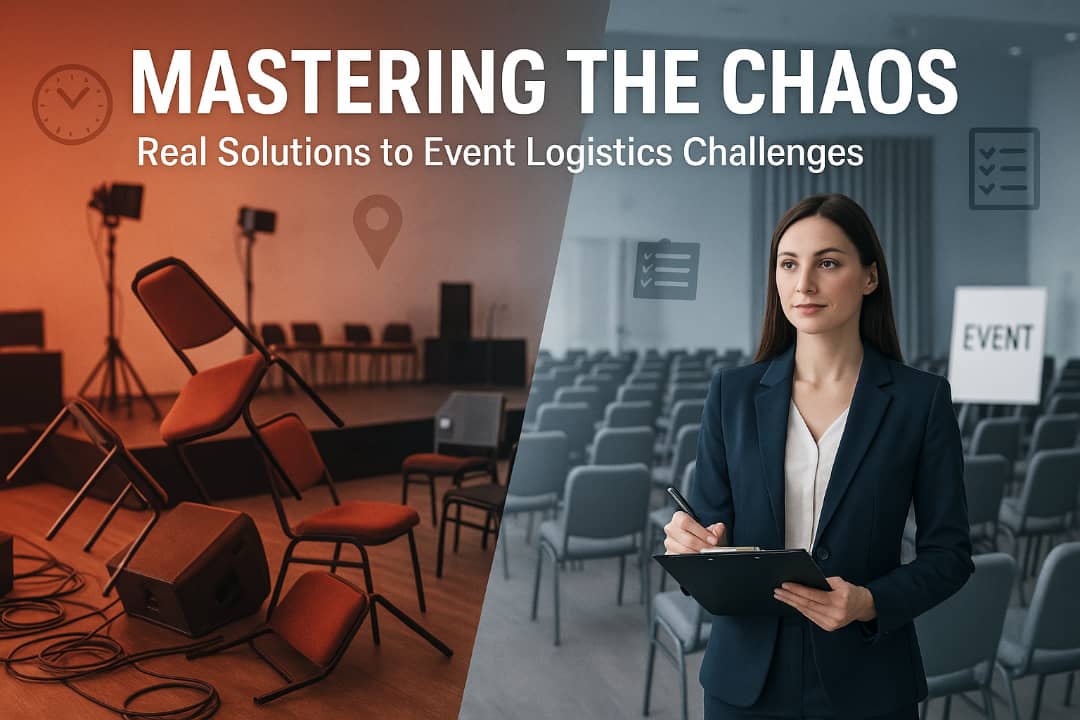
Imagine this: the keynote speaker is late, your shipment of table linens is stuck in traffic, and the power supply for the venue is acting up—all while 500 guests are starting to arrive. This isn’t just a nightmare; it’s the reality for many in the events industry, especially planners managing large-scale corporate functions, weddings, exhibitions, or festivals. Event logistics can make or break the experience.
Why is this important? Because flawless logistics are the backbone of any successful event. From venue management to transport, tech setup to staffing, logistics issues can derail even the most creative plans.
Who needs this? Event organisers, logistics managers, hospitality professionals, and vendors in the live events space.
Key Takeaways:
- The most common logistics issues event planners face
- Real-world examples of what can go wrong
- Proven strategies for overcoming these hurdles
- How to stay flexible and responsive on event day
Venue Access and Layout Planning
One of the earliest and most vital decisions is selecting and preparing the venue. But even with the ideal location, if access isn’t smooth or layout plans are unclear, things can unravel fast.
Common issues include:
- Limited access for large vehicles or equipment
- Inadequate load-in/load-out scheduling
- Floorplan miscalculations
Example:
A tech conference at a historic London hotel ran into trouble when the AV team couldn’t get their LED screens through the narrow stairwells—because no one had double-checked the building’s freight access.
Solutions:
- Conduct site visits early, not just once, but multiple times at different stages.
- Coordinate access times with suppliers and caterers in advance.
- Use digital floor mapping tools to visualise and communicate layouts clearly.
Vendor Coordination and Timelines
Vendors are the lifeblood of any event, but coordinating multiple teams with different deliverables and deadlines can be like herding cats.
Pain points:
- Delayed arrivals
- Miscommunication about deliverables
- Clashing schedules between setup teams
Real-life insight:
At a summer outdoor wedding in Surrey, the marquee team arrived late, pushing back the florists and delaying the caterers—causing a chain reaction that almost ruined the reception start time.
What works:
- Share a centralised master schedule using platforms like Trello or Asana.
- Assign a logistics lead to act as the go-between for all external partners.
- Create buffer times between each vendor’s setup window to absorb delays.
Transport and Parking Woes
Transport planning is often underestimated—until parking chaos or shuttle delays sour the guest experience.
Challenges include:
- Inadequate parking spaces
- Misrouted shuttle services
- Congested urban locations
Case in point:
An arts festival in Manchester ran into PR trouble when attendees posted online about walking 30 minutes due to unclear shuttle stops.
Mitigation strategies:
- Work with local authorities for temporary traffic orders and parking permits.
- Hire a dedicated transport coordinator.
- Provide guests with visual maps and real-time transport updates via event apps or SMS.
Technology Glitches and Power Failures
In today’s high-tech world, reliable AV and power systems are essential. A technical fault can turn a slick event into a frustrating mess.
Examples of what can go wrong:
- Wi-Fi dropouts during live streaming
- Microphone malfunctions during speeches
- Unstable temporary power connections
Real world snapshot:
At a fintech product launch, the Wi-Fi crashed mid-demo. The team hadn’t secured a backup network—and lost both time and credibility.
Preventive measures:
- Conduct multiple tech rehearsals.
- Hire certified technicians for key systems.
- Always have a backup generator and hotspot internet.
Staffing and Communication Breakdowns
A well-trained, well-informed crew can save an event. But unclear instructions or understaffing often spell disaster.
Problems include:
- Last-minute dropouts
- Poorly briefed volunteers
- Inefficient communication on event day
Example:
At a London awards night, the coat check queue became a 45-minute ordeal due to only two staff managing hundreds of guests.
Fixes:
- Use WhatsApp or two-way radios for real-time staff updates.
- Brief every team with printed and digital guides.
- Maintain a list of on-call floaters for emergencies.
Contingency Planning and Risk Management
Despite the best planning, the unexpected will happen—rain, traffic jams, or even protest activity.
Key concerns:
- No backup plans
- Poor insurance coverage
- Panic during unexpected incidents
How to win:
- Always have a Plan B: alternative indoor venue, extra supplies, etc.
- Review all contracts for clauses on delays or cancellations.
- Invest in comprehensive event insurance.
Conclusion: Planning with Precision and Passion
Event logistics aren’t just about moving pieces around—they’re about creating harmony behind the scenes. The more detailed and dynamic your approach, the smoother the result.
Smart planning, layered with contingency thinking, empowers event professionals to handle chaos with calm and competence. So, whether you’re leading a corporate seminar in Birmingham or coordinating a festival in Brighton, sharpen your logistics game.
At 234Inspired, we believe in powering event professionals with insights, tools, and support to take your vision from plan to reality. Ready to level up your planning? Let’s talk logistics.