
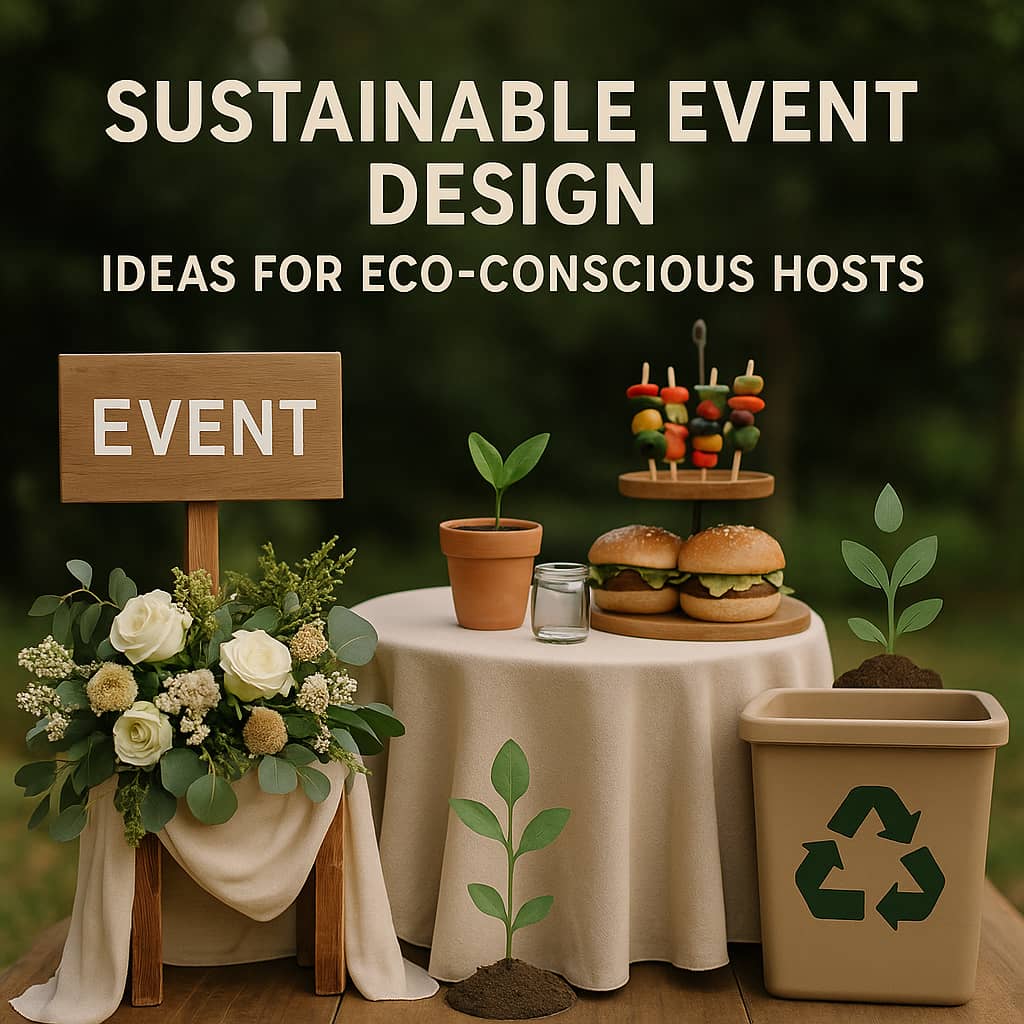
The shift toward sustainability is reshaping the event world, inspiring hosts and planners to create experiences that care for people and the planet. In the UK’s evolving event industry, hosts are embracing environmentally conscious choices that still allow for creativity, style and high quality. Sustainable event design matters because it reduces waste, protects resources and sets a positive example for guests and brands.
In this post, we will explore:
- How sustainable thinking influences event design
- Ideas that make eco conscious hosting achievable
- The role of décor, materials and energy
- Five essential skills every sustainable event designer needs
- Why small changes create meaningful long term impact
Sustainable Event Design and Its Impact
Sustainable event design focuses on reducing environmental harm while maintaining excellent guest experience. It is not about limiting creativity. Instead, it is about designing smarter, selecting materials thoughtfully and planning with longevity in mind.
Eco conscious events often use reusable décor, ethically sourced supplies and energy efficient systems. Many UK planners now partner with local vendors to support regional businesses and reduce carbon emissions from transport. Sustainable design also appeals to guests who appreciate meaningful efforts to protect the environment. Every responsible choice contributes to a more balanced and thoughtful celebration.
Eco Conscious Hosts and Their Role in Responsible Planning
Hosts play an important part in driving sustainable change. The decisions they make from the beginning set the tone for the entire project. Choosing venues with recycling options, natural lighting or renewable energy systems immediately reduces environmental strain.
Eco conscious hosts also influence guests through subtle choices. For instance, digital invitations save paper, and carefully curated décor encourages mindful appreciation rather than distraction. When hosts choose sustainability, they encourage vendors, planners and attendees to do the same, creating a ripple effect that extends beyond the event itself.
Sustainable Materials in Event Design
One of the most straightforward paths to sustainable events is the use of eco friendly materials. Reclaimed wood, recycled glass, organic fabrics and biodegradable tableware all support greener outcomes. These materials maintain quality while reducing waste.
Floral designers across the UK now embrace foam free arrangements, replacing traditional floral foam with reusable structures. Linen suppliers offer organic cotton or hemp alternatives that look elegant and feel luxurious. When combined, these choices create an event that feels naturally beautiful and environmentally considerate.
Energy Efficient Lighting for Eco Conscious Hosts
Lighting plays a central role in setting the mood, yet it can also be a major source of energy consumption. Energy efficient lighting helps reduce strain without compromising ambience. LED fixtures use significantly less power than traditional bulbs and last much longer.
Many modern venues also use programmable lighting systems that adjust brightness throughout the event. This reduces unnecessary energy use while supporting visual appeal. Natural light is another powerful resource, especially for daytime events, making spaces feel warm and welcoming without added energy costs.
Five Essential Skills for Sustainable Event Designers
To create truly sustainable events, designers need a strong mix of practical, creative and strategic skills. These five are essential:
1. Resourceful Creativity
This involves working with limited or reusable materials while still producing striking visual impact. A designer who can transform repurposed items into stylish décor demonstrates real innovation.
2. Knowledge of Eco Friendly Materials
Understanding what materials are biodegradable, recyclable or ethically sourced helps planners make informed decisions. For example, selecting bamboo cutlery or recycled paper signage can significantly reduce waste.
3. Strategic Waste Management
Effective waste planning ensures leftover food, décor and packaging are handled responsibly. Some designers partner with food banks or recycling organisations to minimise disposal.
4. Collaboration with Sustainable Vendors
Building relationships with ethical suppliers helps maintain consistency in design quality and environmental standards. Local vendors also help reduce transport emissions.
5. Awareness of Environmental Regulations
Sustainable designers must stay informed about UK guidelines on waste, energy and emissions. This knowledge helps them plan responsibly and keep events compliant with environmental standards.
Each of these skills ensures that sustainability is woven into the entire event process, not treated as an afterthought.
Low Waste Catering for Sustainable Event Design
Food and drink can create large amounts of waste if not managed thoughtfully. Sustainable catering focuses on seasonal ingredients, locally grown produce and reusable serving ware. Many UK caterers now offer plant forward menus that appeal to diverse guests and reduce environmental impact.
Low waste bars also help by limiting single use plastics and offering refillable glassware. Compostable or recyclable materials provide alternatives when disposables are necessary. Through careful planning, catering becomes both delicious and responsible.
Decor Concepts for Eco Conscious Hosts
Décor can still be elegant and expressive while remaining eco friendly. Living plant installations, potted centrepieces and fabric draping that can be reused all support sustainable goals. Instead of disposable décor, planners can design multi use items that live on after the event.
Simple techniques such as hiring décor instead of purchasing new items also reduce waste. UK hire companies now offer everything from table settings to statement pieces designed for repetition rather than single use.
The Future of Sustainable Event Design
The future of event design will continue to focus on environmental responsibility. More venues are incorporating renewable energy, water saving systems and low waste operations. Technology also supports sustainability through digital mapping, virtual walk throughs and precise planning that minimises material waste.
As guest expectations shift, sustainability becomes a defining feature of modern events. Eco conscious hosts are not only reducing environmental footprints but also shaping a more thoughtful and responsible industry.
Conclusion
Sustainable event design offers hosts a meaningful way to create experiences that care for both people and the planet. From materials and lighting to catering and décor, every choice contributes to a more responsible celebration. Eco conscious hosts lead the way by making informed, ethical decisions that inspire others.
For support in planning your next environmentally responsible event, contact 234Inspired, a global event management company dedicated to delivering creative and sustainable solutions for hosts across the world.