
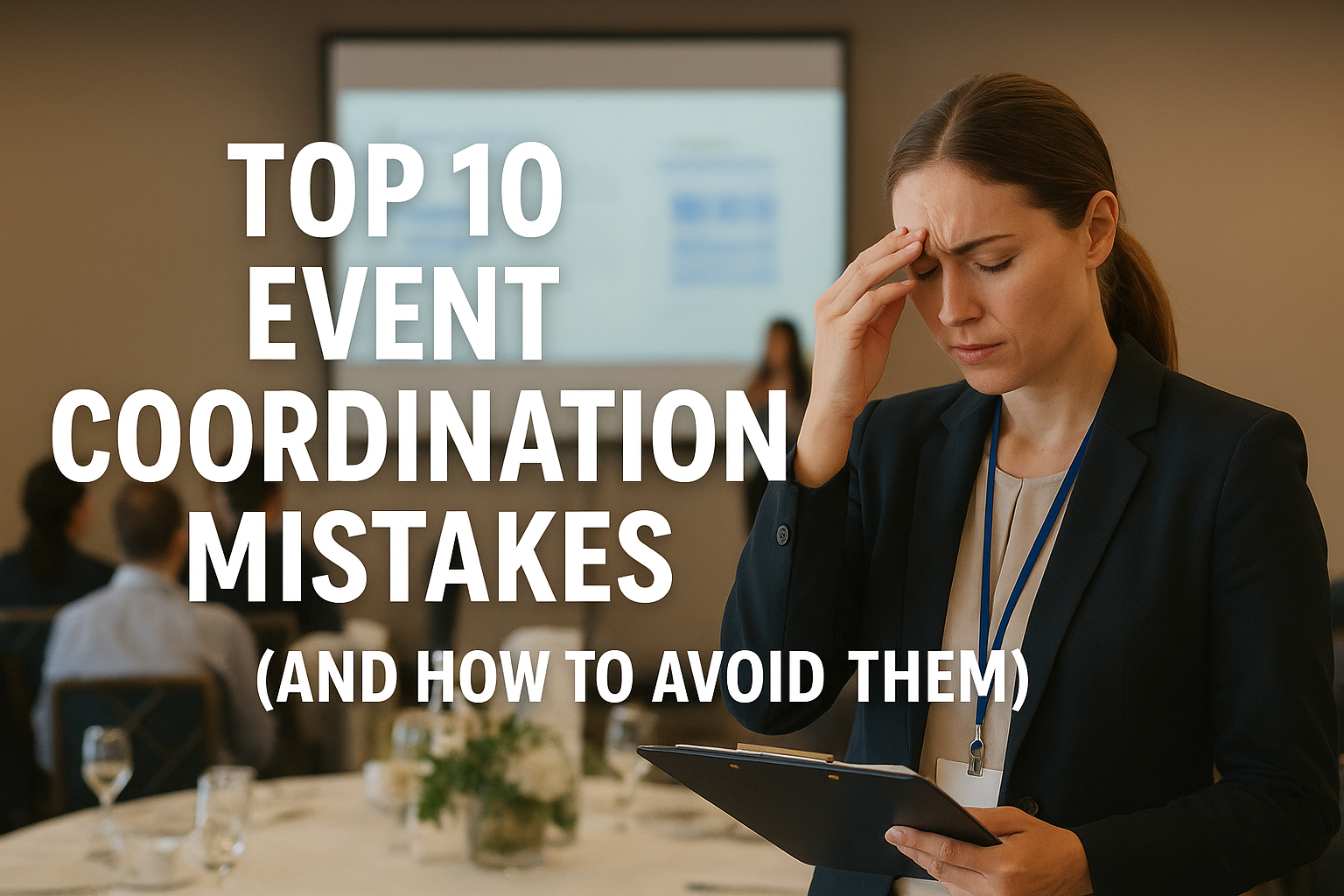
It was a crisp spring morning in London when an organiser realised the keynote speaker’s slides hadn’t been loaded, the catering was delayed, and the seating arrangement had confused half the guests. The event, which had taken months of planning, unravelled in minutes. This story isn’t unusual. In the world of events, even one overlooked detail can tarnish an otherwise brilliant occasion.
That’s why understanding the most common event coordination mistakes is crucial for planners, corporate teams, and anyone managing professional gatherings. With the right foresight, you can avoid disaster and deliver a seamless experience.
Key takeaways:
- The most common mistakes in event planning
- Practical strategies to prevent these errors
- The essential skills every coordinator should master
- Real-life lessons to strengthen your approach
- How professional support can transform your events
1. Poor Communication with Stakeholders
Clear communication is the backbone of successful coordination. Failing to keep vendors, staff, and clients aligned often leads to last-minute surprises. Regular check-ins and well-documented updates prevent misunderstandings and ensure everyone is on the same page.
2. Neglecting Time Management
Time is your most valuable asset. A poorly structured timeline leaves no room for unexpected hiccups. Smart planners build in buffer periods for setup, rehearsals, and technical checks to keep everything flowing smoothly.
3. Ignoring Budget Control
Overspending or underestimating costs can derail even the best ideas. Always create a detailed budget that accounts for hidden costs such as overtime pay, additional décor, or last-minute rentals. Tracking expenses closely ensures financial control.
4. Overlooking Risk Management
From weather disruptions to technical breakdowns, risks are part of events. Without contingency plans, minor problems can escalate. Experienced coordinators prepare backups for everything, including power supply, speakers, and catering.
5. Weak Guest Experience Planning
Guests remember how an event made them feel. Confusing signage, long registration queues, or dull downtime can frustrate attendees. Enhancing flow, accessibility, and engagement makes a world of difference.
6. Forgetting Vendor Reliability Checks
Not all vendors deliver what they promise. Skipping background checks or relying solely on price can backfire. Always review past performances, ask for references, and establish clear service-level agreements.
7. Inadequate Technology Setup
An unreliable microphone or glitching presentation screen can ruin the moment. Test all equipment ahead of time, train staff, and have technical support on standby to avoid embarrassing mishaps.
8. Poor Team Coordination
A well-trained team is a planner’s best asset. Without clear roles and responsibilities, tasks overlap or fall through the cracks. Assign duties early and empower team members with the tools they need.
9. Last-Minute Programme Changes
Frequent changes without structured updates confuse participants and staff. Always confirm the schedule in advance, and if changes are inevitable, communicate them promptly and clearly.
10. Failing to Evaluate Post-Event
The event doesn’t end when the last guest leaves. Skipping evaluations means missing opportunities to improve. Collect feedback, assess performance against goals, and apply lessons to future projects.
Five Essential Skills Every Event Coordinator Must Master
1. Organisation
Keeping track of dozens of moving parts demands excellent organisational skills. From checklists to digital planning tools, structure keeps chaos at bay.
2. Communication
Strong interpersonal skills ensure clarity between clients, vendors, and guests. The best coordinators listen actively and deliver updates concisely.
3. Problem-Solving
Unexpected issues will arise. Quick thinking and calm decision-making turn potential disasters into smooth recoveries.
4. Negotiation
Being able to secure the best deals with venues, suppliers, and contractors without compromising quality saves both money and stress.
5. Attention to Detail
Small touches create big impressions. Coordinators who notice the finer details set their events apart.
Conclusion
Avoiding common event coordination mistakes isn’t just about saving face—it’s about delivering experiences that inspire confidence and satisfaction. By mastering essential skills and preparing for potential pitfalls, you’ll set your events apart from the ordinary.
If you’re planning a corporate event, conference, or special gathering, reach out to 234Inspired, a global event management team dedicated to ensuring your vision is executed flawlessly.